
Modal Dice Roller
Roll the Modal Dice to randomly select a parent scale, mode, and root. Inspired by the physical Modal Dice, this tool helps you explore musical ideas with a touch of chance.
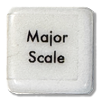
Roll the Modal Dice to randomly select a parent scale, mode, and root. Inspired by the physical Modal Dice, this tool helps you explore musical ideas with a touch of chance.
Modal Dice is a randomizer for exploring scales and modes. Three "dice" pick a parent scale, a mode, and a root note — giving you 35 possible modes × 12 roots = 420 combinations to practice and improvise over. It's based on the physical Modal Dice, designed to push you out of comfortable scale choices and into territory you wouldn't normally pick on your own.
Click the green Roll Dice button. The three dice will animate briefly and land on:
If you roll "Synthetic/Other/Roll Again" on the parent die or "Roll Again" on the mode die, the app automatically re-rolls so you always end up on a defined mode.
Loop a single tonic drone (or a tonic chord) on a backing track in the rolled root, then improvise using only the notes of the rolled mode. Listen for how each scale degree feels against the tonic. Then re-roll and start over.
After each roll, click Show tension/resolution to reveal a panel that breaks the rolled mode into:
For any 7-note tonality, the 12 chromatic pitches break into three groups: 3 resolution notes (the tonic triad), 4 tension notes (the rest of the scale), and 5 "wrong" notes (everything outside the scale). The tension 4-note set always forms a 7th chord that's also two overlapping triads a third apart — and those two triads flank the tonic chord (one a step below, one a step above).
For example, in C Ionian: tonic = C–E–G (resolution). The 4 tension notes are D, F, A, B — which form a Bm7♭5, or two triads: B° (below the tonic) and Dm (above the tonic).
Note spellings follow tonal-music convention: every scale degree gets its own letter name (1, 2, 3, 4, 5, 6, 7 = seven different letters). This sometimes requires double accidentals (♭♭ or ×) — that's correct theory, not a typo.
For dual-name root rolls (like A♯/B♭), the app picks whichever spelling produces the cleanest result. If the cleanest spelling still has double accidentals on the tonic, "below," or "above" chord roots, an "* Enharmonic equivalent (easier to read)" line appears underneath with the same chord respelled.
After every roll, the dark "Explore this mode in 4-Note Universe" button opens the 4-Note Universe app with the rolled mode's intervals already loaded. There you can see every 4-note chord voicing that fits inside the mode, run modal rotations, try negative harmony on the scale, and view the rhythm notation.
The second button, "Work out this mode in Modal Burpees," opens the Modal Burpees app on the rolled root and mode. There you work the same sound through seven steps: scale positions, triads, triad arpeggios, open triads, pentatonics, 4-note chords and 4-note arpeggios.
Click Show chord/cell options to open a browsable list of every subset of the rolled mode that contains the root. Organized by size:
Those numbers come from a classic bit of math: they're Pascal's triangle row 6 (1, 6, 15, 20, 15, 6, 1 = 64 total subsets). Every subset that contains the root picks its other members from the remaining 6 scale degrees.
By default, subsets show as scale-degree intervals (1, ♭3, 5, etc.) so they're tonality-independent. Click Show letter names to see the same subsets spelled in the rolled root's actual letters.
— Noel